Launch offer — valid today only

📄 Digital book in PDF · read it on your phone or print it

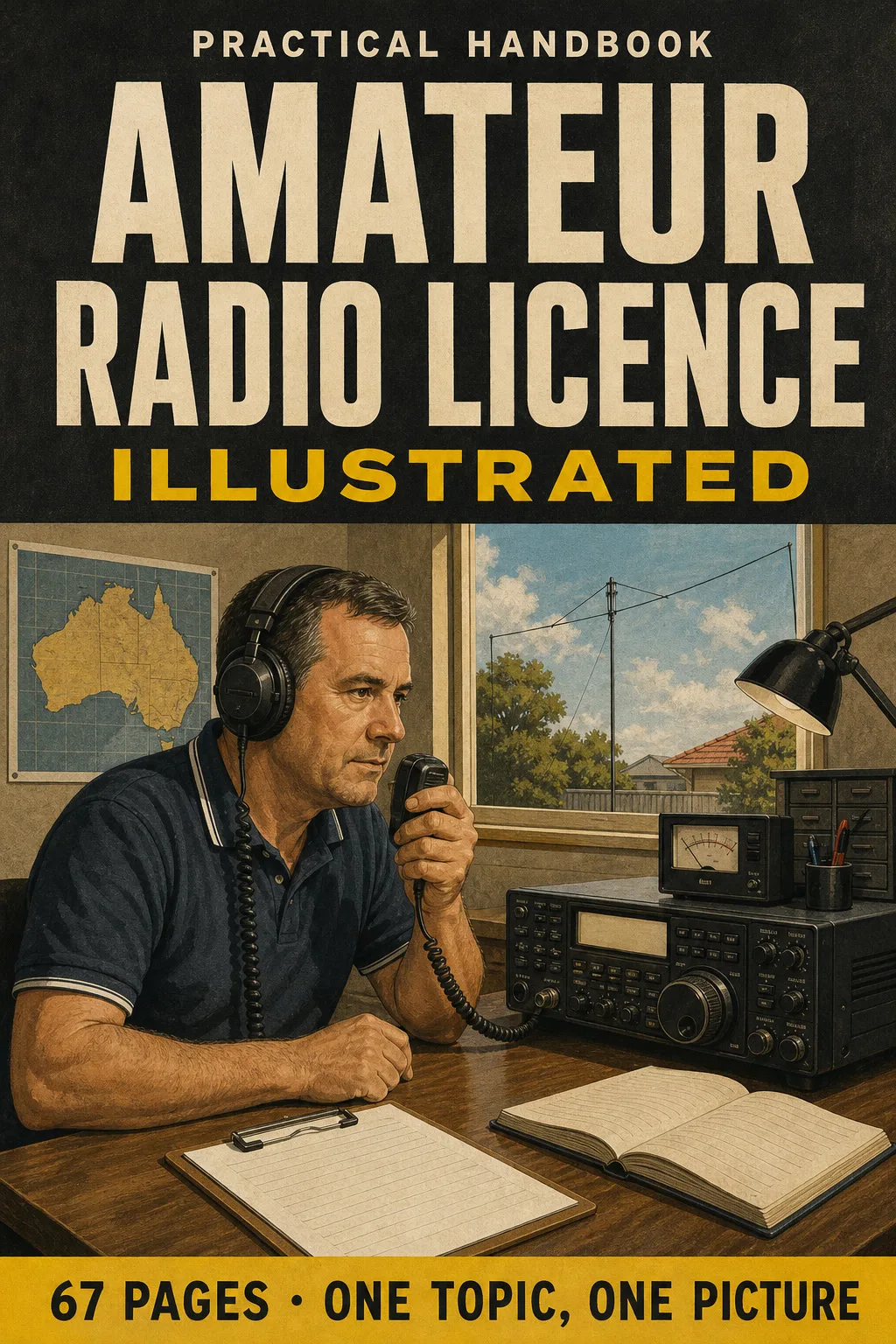
Australian Amateur Radio Licence Theory, Foundation to Advanced, in Drawings One Topic on Every Page

Ohm's law, power, decibels, wavelength, the dipole, SWR, propagation, Australian call signs and the model call. Every topic has its own page: the drawing first, then what you need to remember. 67 illustrated pages.

START STUDYING THIS WAY

🔒 Secure checkout · PDF by email · 30-day guarantee

Every topic, its own pageEach formula and rule drawn, with the explanation beside it
67 illustrated pages9 parts, from the three-level ladder to your first call on air
Up-to-date sourcesACMA class licence, ACMA syllabuses and ARPANSA's RF exposure standard
PDF by emailFormat

Look Inside the Book

Every page has a big drawing and a box with the numbers and steps you need to know:

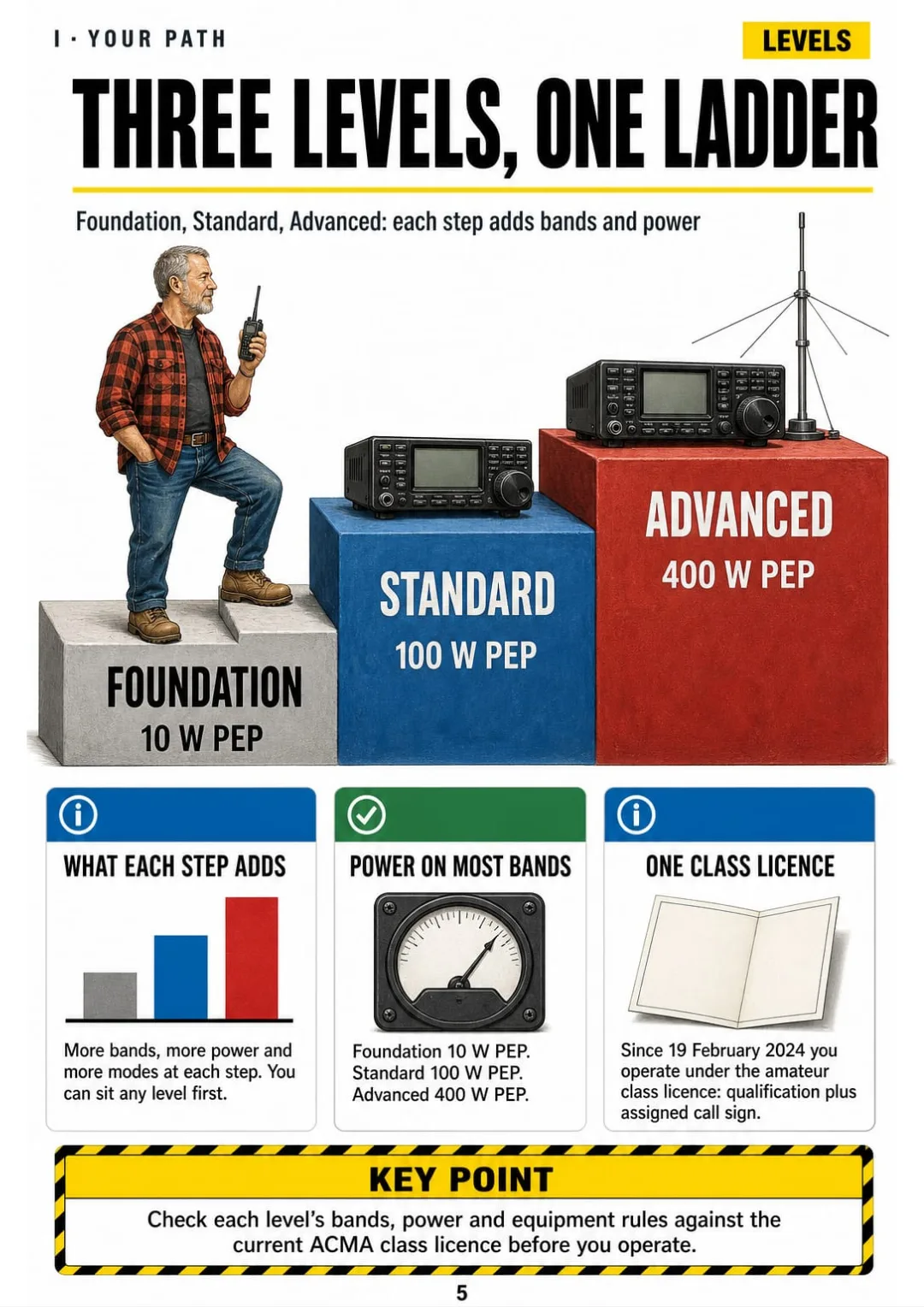
Foundation 10 W, Standard 100 W, Advanced 400 W PEP: the ladder on one page
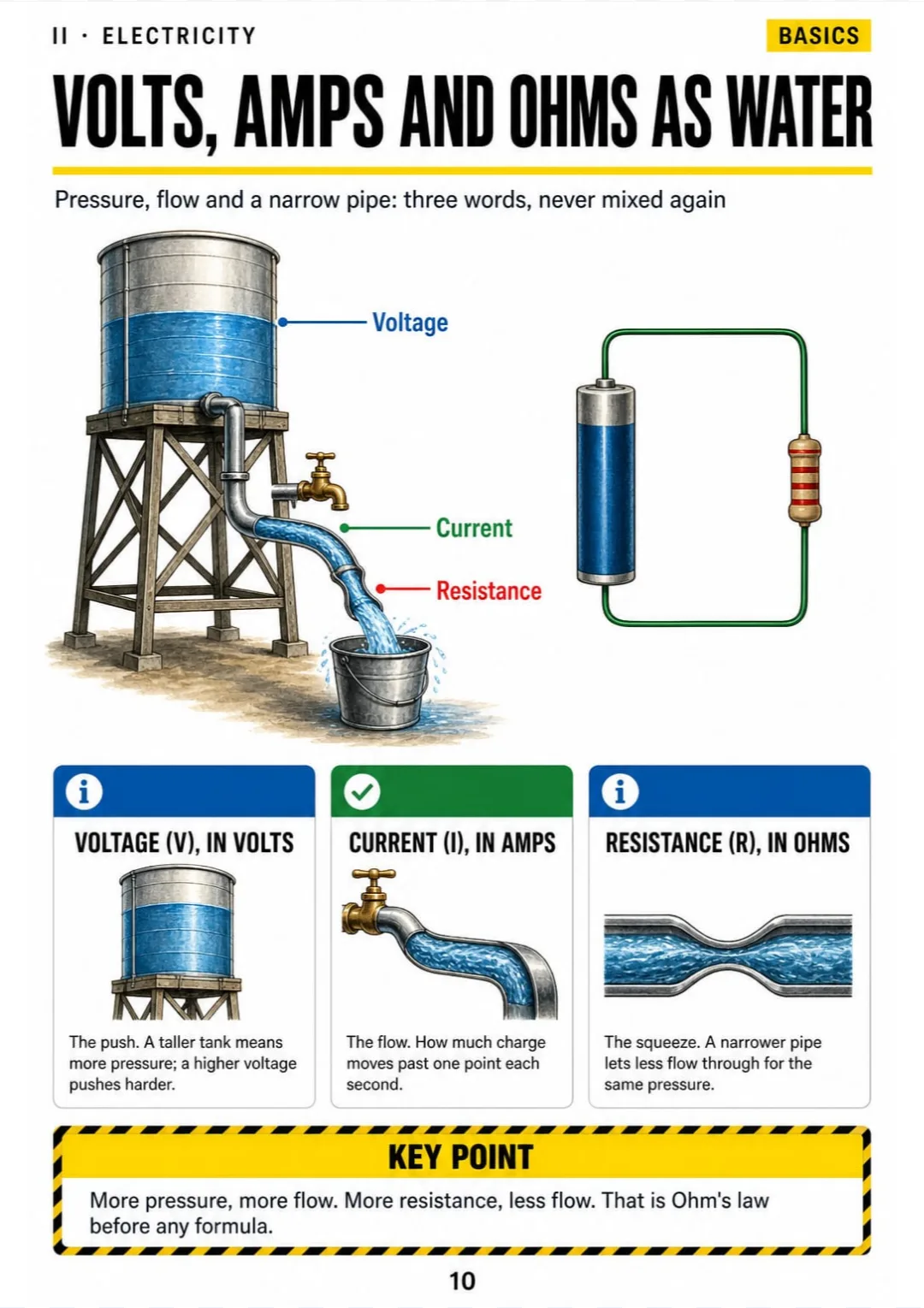
Voltage is pressure, current is flow, resistance is the narrow pipe: one drawing.
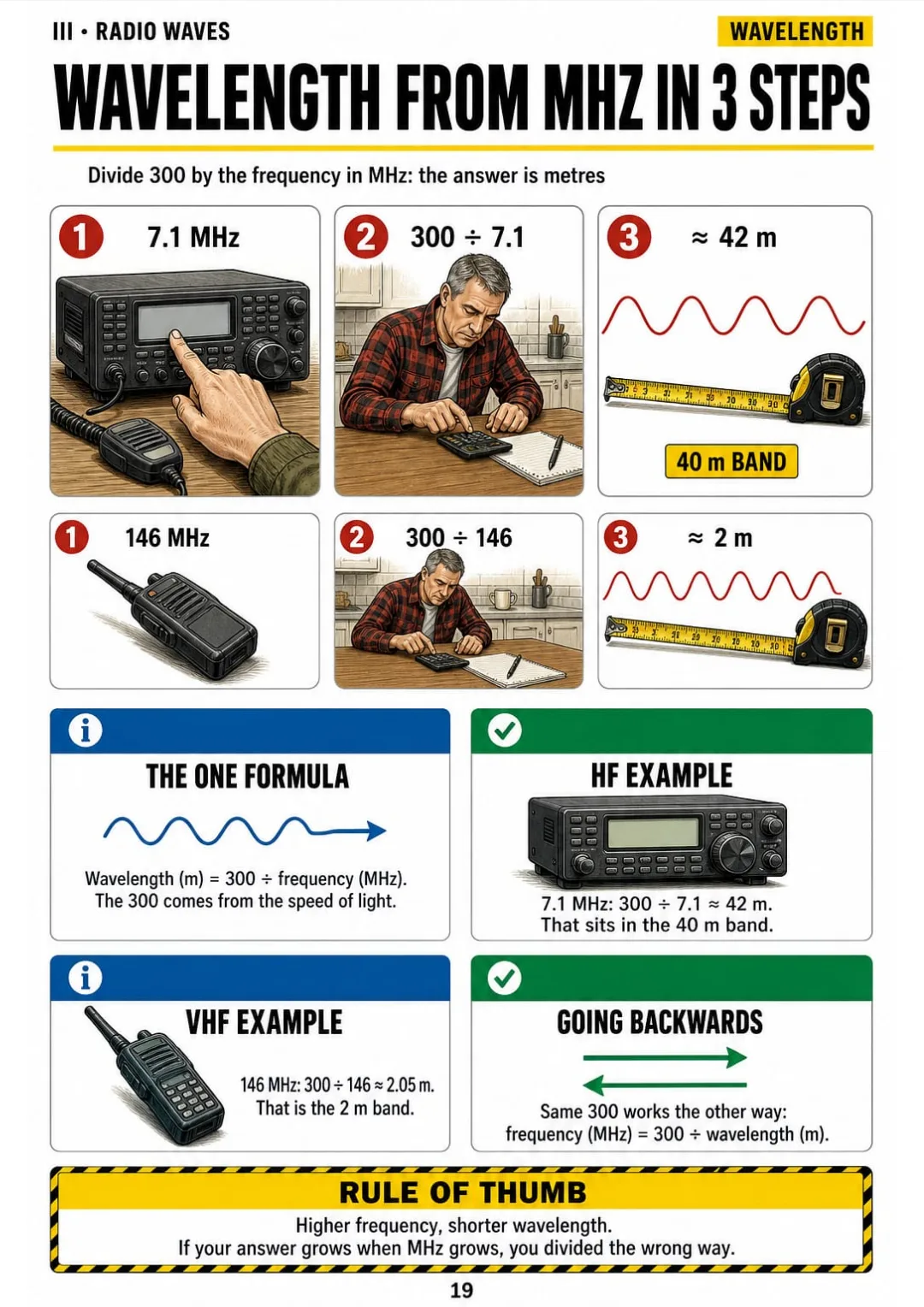
λ (m) = 300 ÷ f (MHz): 7.1 MHz ≈ 42 m, 146 MHz ≈ 2 m
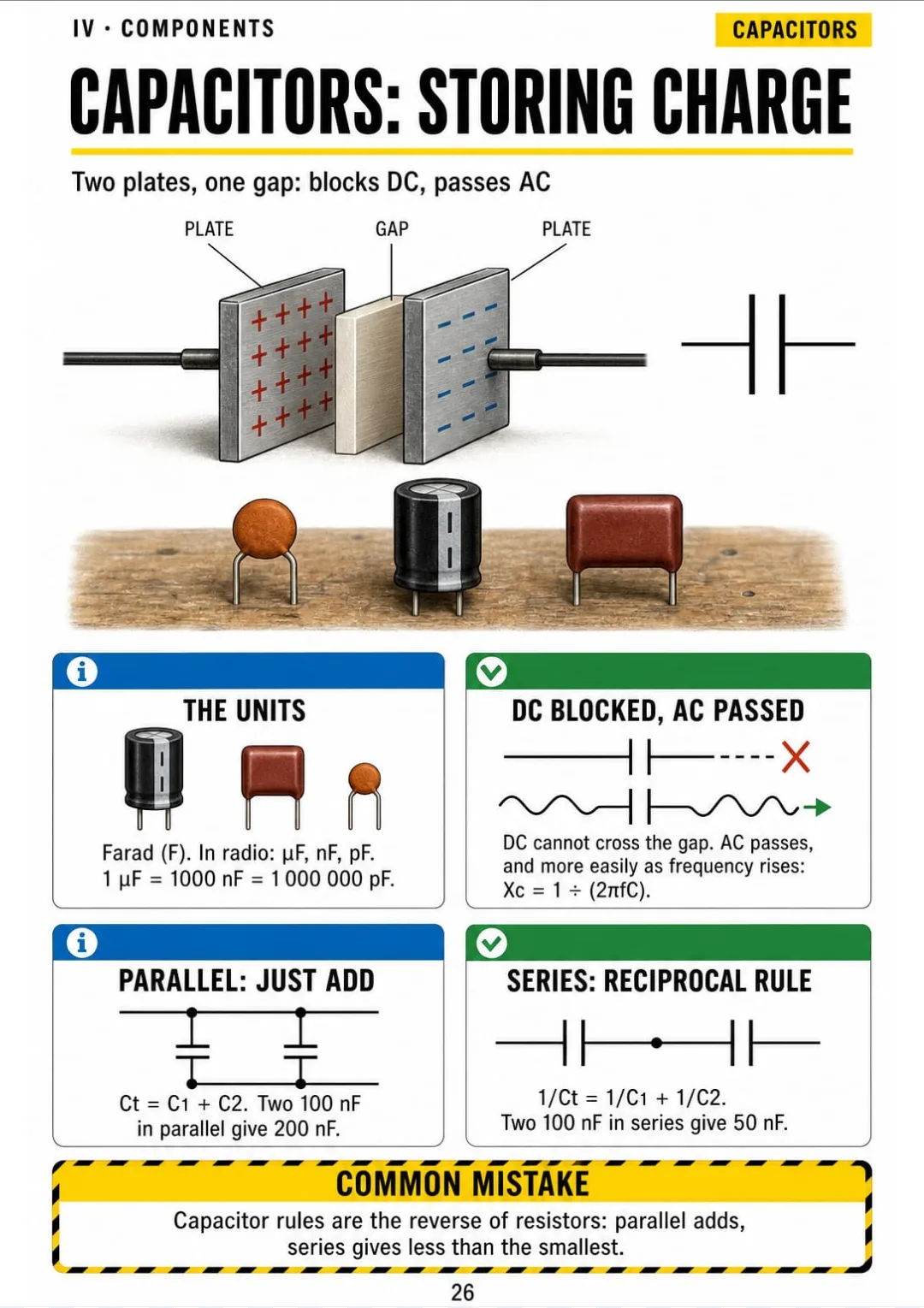
Two 100 nF capacitors: 200 nF in parallel, 50 nF in series
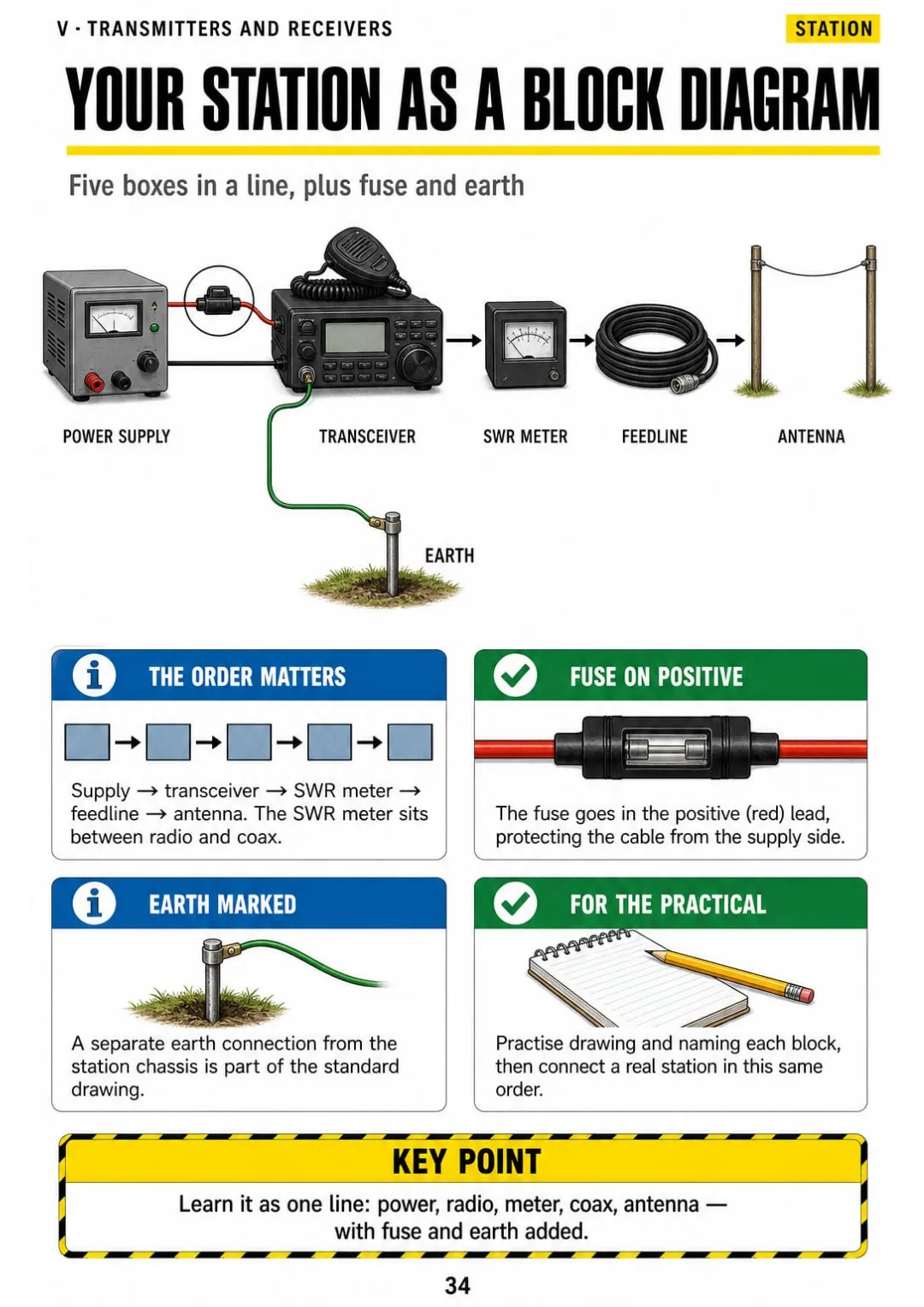
Power supply → transceiver → SWR meter → feedline → antenna, with fuse and earth
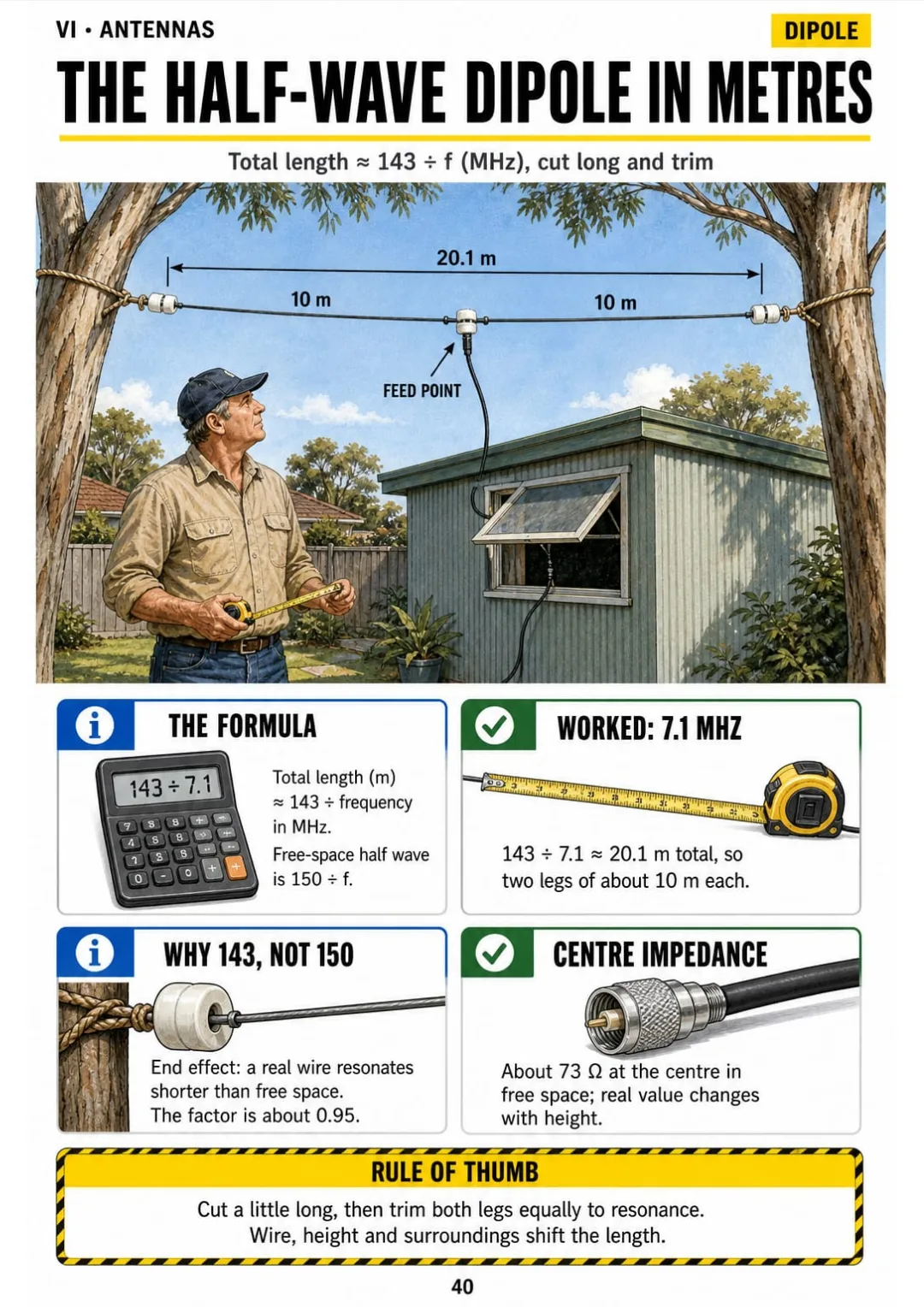
Dipole for 7.1 MHz: 143 ÷ 7.1 ≈ 20.1 m, two legs of about 10 m
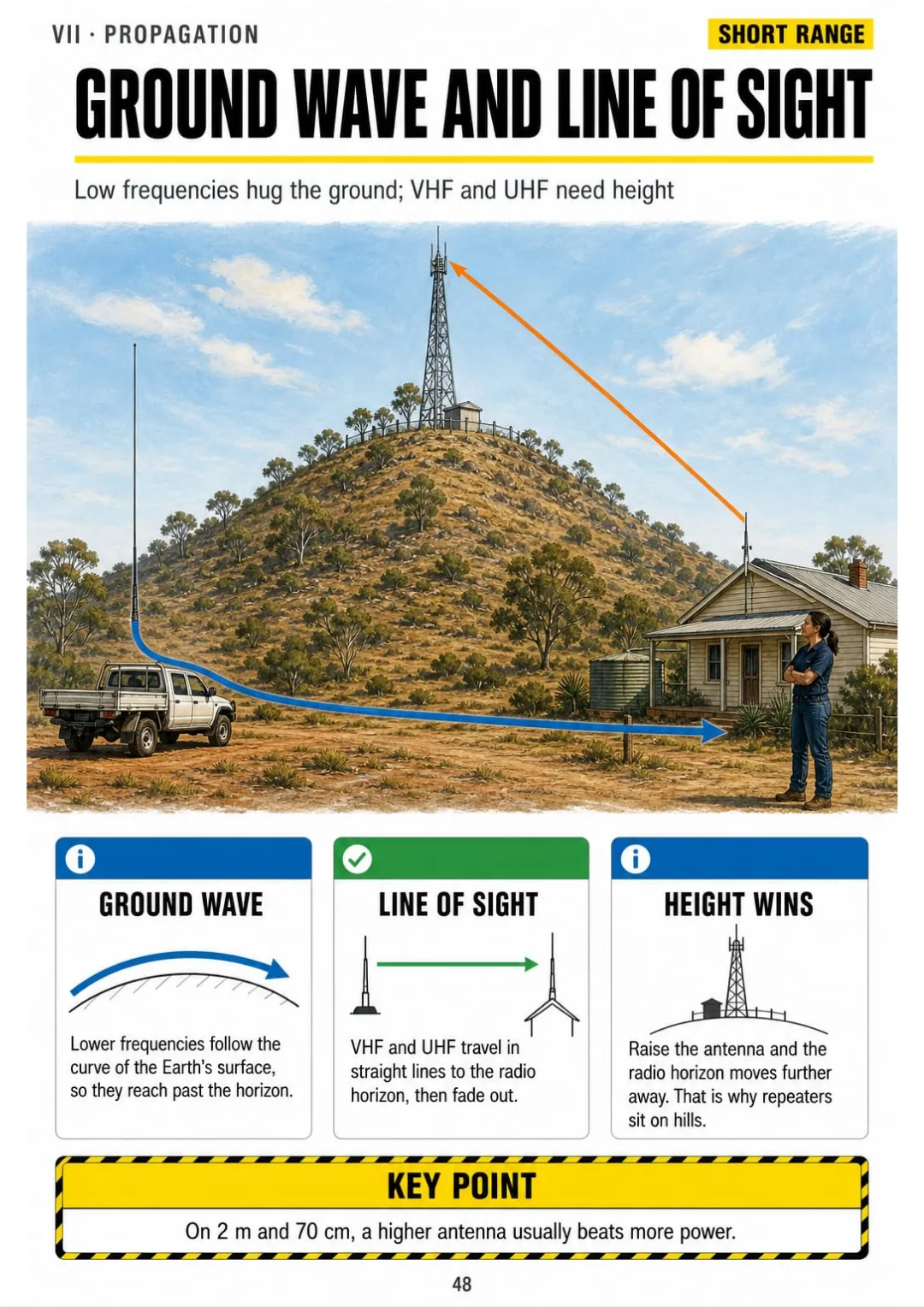
Ground wave follows the Earth; VHF and UHF need line of sight, so height matters.
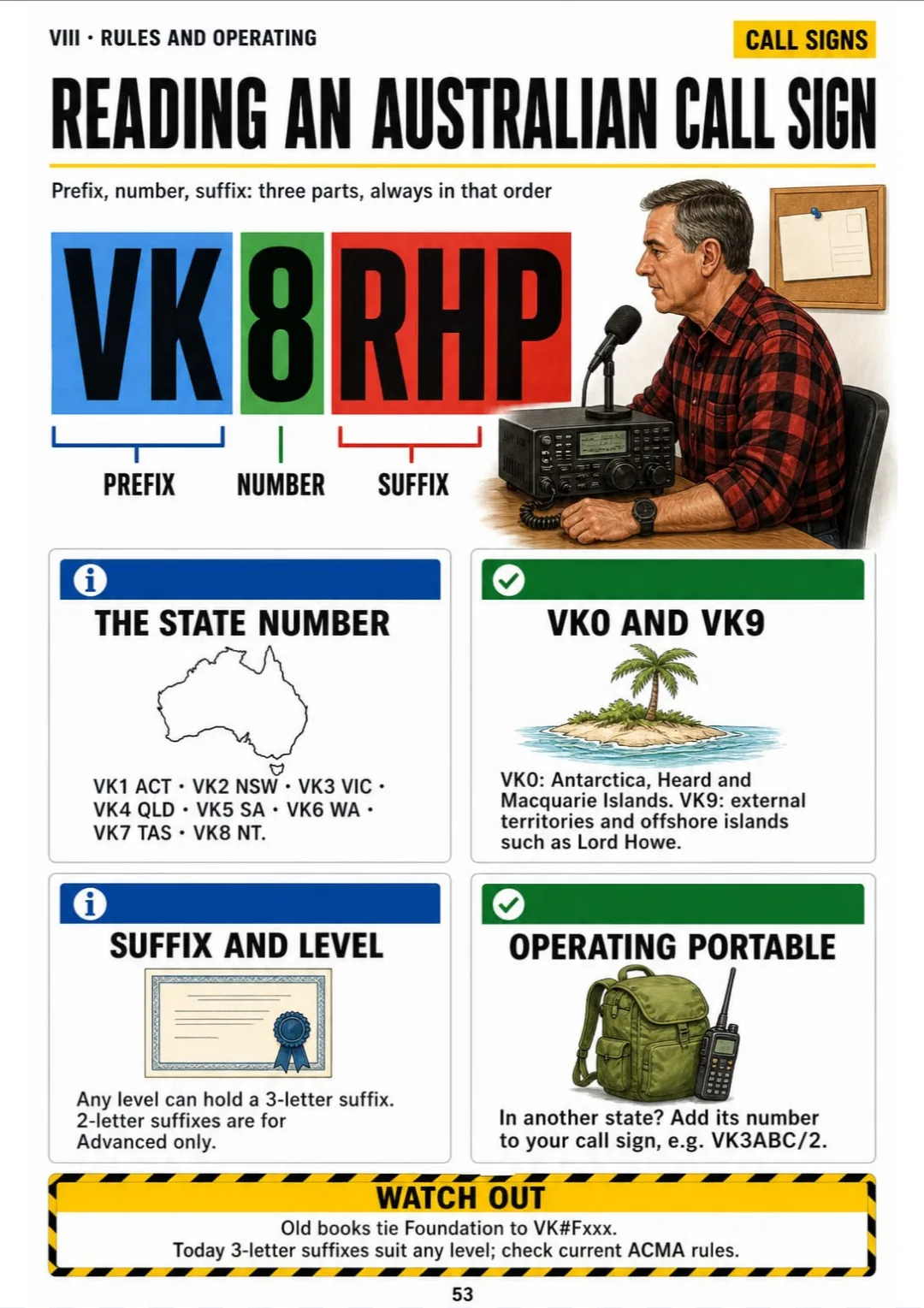
VK8RHP = prefix + state number + suffix; a 3-letter suffix doesn't show your level

Swipe to see more →

These are real pages from the book. The table of contents is the full one: 9 parts and 63 topics.

The Problem Isn't You. It's How It Was Explained.

You're doing a practice question: what's the wavelength at 7.1 MHz? You know there's a formula, but it won't come.

The course manual covers it in paragraphs on the speed of light, metres per second and powers of ten. By the third line, the one number you needed is buried.

λ (m) = 300 ÷ f (MHz): 7.1 MHz ≈ 42 m, 146 MHz ≈ 2 m

In this book it's one page, in three steps: λ (m) = 300 ÷ f (MHz). 7.1 MHz comes out at about 42 m, 146 MHz at about 2 m, with the wave drawn right beside the numbers.

The same goes for Ohm's law, decibels, the half-wave dipole, SWR and reading an Australian call sign: each one has its own page.

You see it, you get it, and on assessment day you work it out without going back to the manual.

COMPARE FOR YOURSELF

The Same Topic, Two Ways to Study It

THIS
  • The manual: line after line
  • Volts, amps and ohms explained only in words
  • You reach the assessment still unsure
Electromotive force, measured in volts (V), is the potential difference that causes charge carriers to move through a conductor. The rate of flow of charge past a point, measured in amperes (A), is defined as one coulomb per second. Opposition to this flow, measured in ohms (Ω), depends on the material, length and cross-sectional area of the conductor. These three quantities are related such that the current in a circuit is directly proportional to the applied voltage and inversely proportional to the resistance, provided physical conditions remain constant.
FOR THIS
  • Volts, amps and ohms in one drawing
  • The key numbers in a box
  • You see it and you get it
Voltage is pressure, current is flow, resistance is the narrow pipe: one drawing.
CONTENTS

Take a Look at the 9 Parts and 63 Topics

Your path to a call sign, electricity, radio waves and decibels, components, transmitters and receivers, antennas, propagation, rules and operating practice, and the practical: 67 pages, all illustrated

IYour Path to a Call Sign · pp. 5-9
  1. Three Levels, One Ladder
  2. What the Assessment Looks Like
  3. From Pass to Call Sign
  4. Foundation vs Standard vs Advanced at a Glance
  5. How to Use This Book
IIElectricity Without the Fog · pp. 10-18
  1. Volts, Amps and Ohms as Water in a Pipe
  2. The Ohm's Law Triangle
  3. Ohm's Law Worked Step by Step
  4. Power: Watts Are Volts Times Amps
  5. Power the Other Two Ways
  6. Resistors in Series
  7. Resistors in Parallel
  8. The Resistor Colour Code
  9. DC, AC and Frequency
IIIRadio Waves and Decibels · pp. 19-25
  1. Wavelength in Metres from MHz
  2. The Amateur Bands on One Chart
  3. AM, FM and SSB Side by Side
  4. Bandwidth: How Much Room a Signal Takes
  5. Decibels Without the Maths Panic
  6. Decibels Worked Step by Step
  7. Peak Envelope Power (PEP)
IVComponents and Circuits · pp. 26-33
  1. Capacitors: Storing Charge
  2. Inductors: Coils That Resist Change
  3. Resonance and Tuned Circuits
  4. Transformers and Turns Ratio
  5. Diodes: One-Way Valves
  6. Transistors as Switches and Amplifiers
  7. Filters: Low-Pass, High-Pass, Band-Pass
  8. Oscillators and Frequency Stability
VTransmitters and Receivers · pp. 34-39
  1. Your Station as a Block Diagram
  2. Inside a Transmitter
  3. Inside a Superhet Receiver
  4. Harmonics and Spurious Emissions
  5. Interference: Yours and Your Neighbour's
  6. Power Supplies and 12 V Safety
VIAntennas and Feedlines · pp. 40-47
  1. The Half-Wave Dipole in Metres
  2. The Quarter-Wave Vertical
  3. The Yagi: Pointing Your Signal
  4. Radiation Patterns Compared
  5. Polarisation
  6. Coax and Impedance
  7. SWR: What the Meter Is Telling You
  8. Baluns and Antenna Tuners
VIIPropagation · pp. 48-52
  1. Ground Wave and Line of Sight
  2. The Ionosphere Layers
  3. Day vs Night on HF
  4. Skip Zone and MUF
  5. The Sunspot Cycle and VHF Surprises
VIIIRules and Operating Practice · pp. 53-61
  1. Reading an Australian Call Sign
  2. The Phonetic Alphabet in Order
  3. A Model Call, Step by Step
  4. Q Codes and Signal Reports
  5. Using Repeaters
  6. Emergency and Distress Traffic
  7. Licence Conditions in Outline
  8. EME Safety: Keeping People Clear
  9. Electrical and Antenna Safety
IXPractical, Revision and the Day · pp. 62-67
  1. Practical Assessment Checklist
  2. Formula Sheet on One Page
  3. Ten Calculations, Solved the Same Way
  4. The Mix-Ups That Catch People Out
  5. The Night Before
  6. After the Pass: Your First Call on Air

One Page, One Topic, All Clear

Think of it this way:

It's the week before your assessment and a practice question wants a half-wave dipole for 7.1 MHz. You need the length in metres, and you need to trust it.

You turn to the half-wave dipole page and there it is: 143 ÷ 7.1 ≈ 20.1 m, two legs of about 10 m, with the antenna drawn from the centre out to each end. On the day, you've already done it once.

Power supply → transceiver → SWR meter → feedline → antenna, with fuse and earth

The same with the Ohm's law triangle, decibels, the Yagi, day and night on HF and the model call: each one on its own page.

Amateur Radio Licence Illustrated is 67 illustrated pages in 9 parts, with a one-page formula sheet, ten calculations solved the same way and a practical checklist at the end.

What you see drawn, you don't have to memorize.

What's Inside Amateur Radio Licence Illustrated:

Ipp. 5-9

Your Path to a Call Sign

The three levels as one ladder, what the assessment looks like, from pass to call sign and the levels side by side.

IIpp. 10-18

Electricity Without the Fog

Volts, amps and ohms as water, the Ohm's law triangle worked step by step, power three ways, series and parallel, the colour code, DC and AC.

IIIpp. 19-25

Radio Waves and Decibels

Wavelength in metres from MHz, the bands on one chart, AM, FM and SSB side by side, bandwidth, decibels worked out and PEP.

IVpp. 26-33

Components and Circuits

Capacitors, inductors, resonance, transformers, diodes, transistors, filters and oscillators.

Vpp. 34-39

Transmitters and Receivers

Your station as a block diagram, inside a transmitter and a superhet receiver, harmonics, interference and 12 V safety.

VIpp. 40-47

Antennas and Feedlines

The half-wave dipole in metres, the quarter-wave vertical, the Yagi, radiation patterns, polarisation, coax, SWR, baluns and tuners.

VIIpp. 48-52

Propagation

Ground wave and line of sight, the ionosphere layers, day and night on HF, skip zone and MUF, and the sunspot cycle.

VIIIpp. 53-61

Rules and Operating Practice

Reading an Australian call sign, the phonetic alphabet, a model call, Q codes, repeaters, emergency traffic, licence conditions in outline and EME safety.

IXpp. 62-67

Practical, Revision and the Day

The practical checklist, a one-page formula sheet, ten calculations solved the same way, the common mix-ups, the night before and your first call on air.

At the end of the book: A one-page formula sheet, ten calculations solved the same way and a one-page practical checklist.
Plus: 2 Free Books

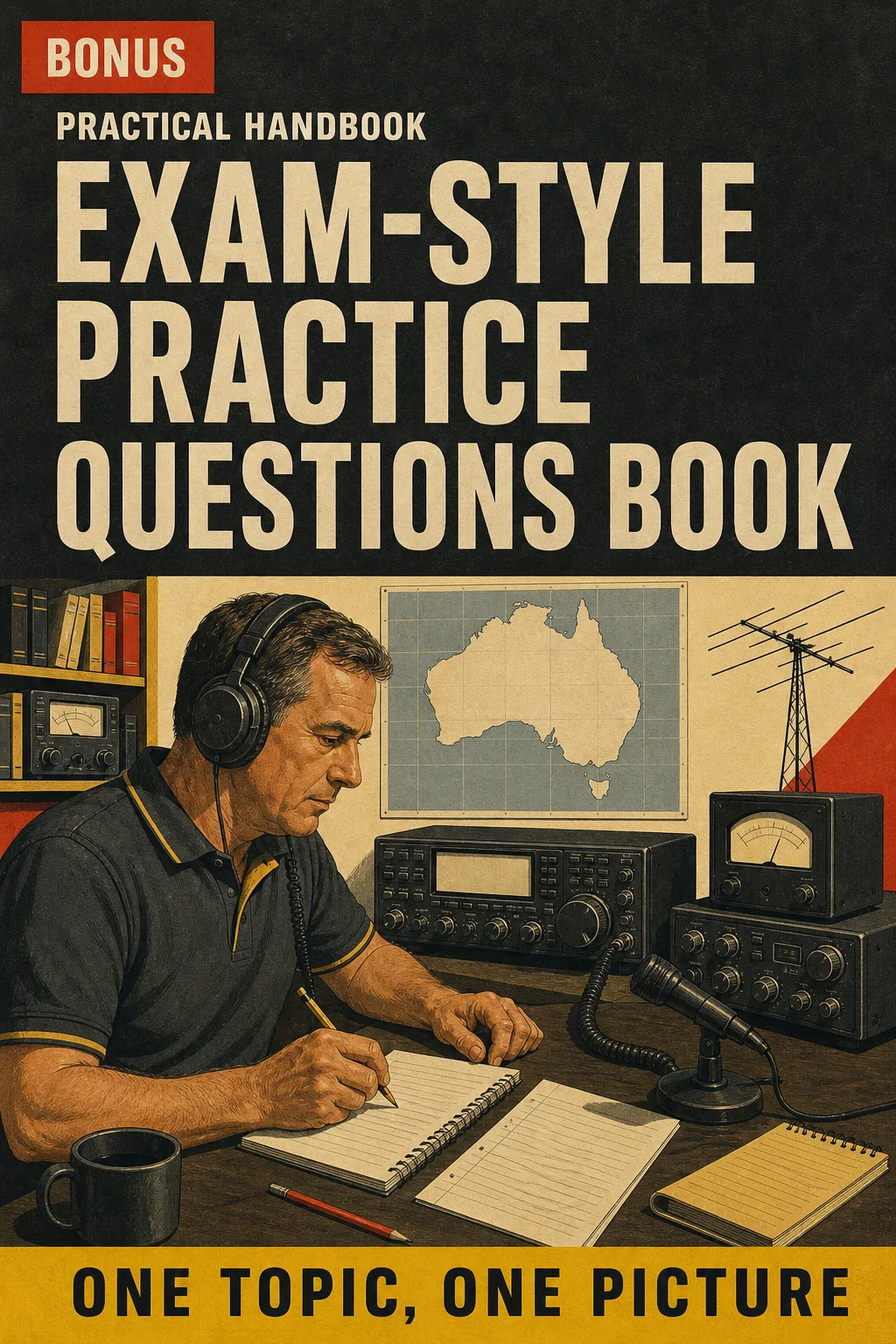
Exam-Style Practice Questions Book

BONUS 1: «Exam-Style Practice Questions Book»

Value on its own: US$ 17.90

Test yourself on theory, regulations and operating practice with exam-style questions and worked answers, so you can see what you've really got before assessment day.

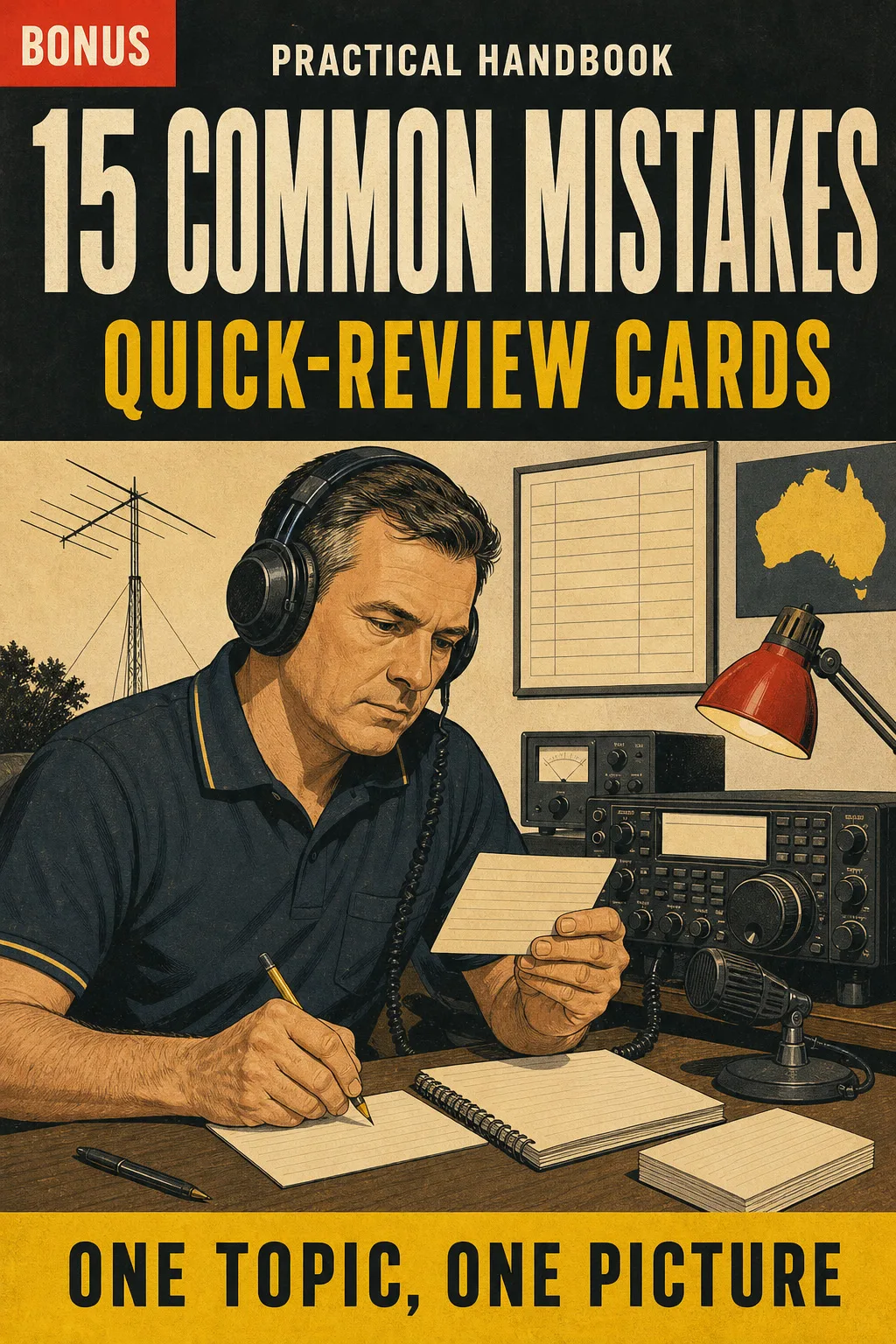
15 Common Mistakes: Quick-Review Cards

BONUS 2: «15 Common Mistakes: Quick-Review Cards»

Value on its own: US$ 14.90

The most frequent slip-ups (mixing up watts and volts, wrong dipole length, phonetics out of order) shown before and after, one card each, for a last read the night before.

Amateur Radio Licence Illustrated with 2 Free Books

  • Amateur Radio Licence Illustrated: 67 illustrated pagesUS$ 63
  • BONUS 1: Exam-Style Practice Questions BookUS$ 17.90
  • BONUS 2: 15 Common Mistakes: Quick-Review CardsUS$ 14.90
  • High-resolution PDF to printIncluded
Total value US$ 95.80
YOUR PRICE:
US$ 27
You save US$ 68.80
YES, I WANT AMATEUR RADIO LICENCE ILLUSTRATED FOR US$ 27

📄 This is a digital PDF book sent to your email: nothing is printed or shipped.

Secure purchaseEncrypted payment30-day guarantee

PDF by email: We email you Amateur Radio Licence Illustrated as a PDF, together with the two free books. It's a single payment: no installments, no extra charges.

Who This Book Is For

You're studying for Foundation

You're studying for Foundation

Electronics was 40 years ago at school. Here every idea starts from a drawing, so Ohm's law and wavelength make sense before you touch a formula.

Your assessment is coming up

Your assessment is coming up

The formula sheet, the ten solved calculations and the practical checklist are all in one place, for a calm last read before you sit with the assessor.

You hold Foundation and want to upgrade

You hold Foundation and want to upgrade

Capacitors, tuned circuits, decibels, SWR and dipole lengths are worked in metres, in the same steps every time, for Standard and Advanced.

Everything You Get Today

US$ 95.80US$ 27
YES, I WANT AMATEUR RADIO LICENCE ILLUSTRATED FOR US$ 27

📄 This is a digital PDF book sent to your email: nothing is printed or shipped.

30DAYS
GUARANTEE

30-Day Guarantee

Try Amateur Radio Licence Illustrated for 30 days, bonus books included.

We refund everything if the file won't open, if the book isn't what you see here, if you were charged twice or if the email doesn't arrive. Just email us.

You pay once. No subscriptions.

Frequently Asked Questions

Is it for me if I last saw electronics at school 40 years ago?

Yes. It starts from the very beginning, with volts, amps and ohms drawn as water in a pipe, and goes up one page at a time through the topics of Foundation, Standard and Advanced. Each topic gets one drawn page with the key numbers, to go alongside your course material. It's written for Australia, in metric units, with ACMA rules and VK call signs, not US FCC rules.

Where does the content come from?

It's written against ACMA's Radiocommunications (Amateur Stations) Class Licence, the Foundation, Standard and Advanced syllabuses and ARPANSA's RF exposure standard. Rules change, so every rule, band and power limit is marked on its page: check it against the current version on the ACMA website and with your assessor before you sit.

Is it official material?

No. It's an independent illustrated study book. It isn't published, approved or endorsed by the ACMA, the WIA or any assessor or club.

Does it replace the course or the assessor?

No. It's a study companion to go with your course, your club and your assessor. It doesn't give you a certificate or a call sign: those only come from passing your assessment and applying for your call sign. The book makes the theory clear before you sit.

Are the practice questions the real assessment questions?

No. They're exam-style questions written for this book, with worked answers, so you can see what you've really got before assessment day.

How does it arrive?

The book and the 2 bonus books arrive as PDFs by email, to the address you enter at checkout. You can read them on a phone, tablet or computer, or print them.

Do I have to pay every month?

No. It's a one-off payment. No subscription.

Can I have it on paper?

Yes. The PDF prints at home or at any print shop, so you can keep it in the shack or in the caravan.

How does the refund work?

You have 30 days. We refund everything if the file won't open, if the book isn't what you see on this page, if you were charged twice or if the email doesn't arrive: just email us.

Before You Close This Page

No more rereading with nothing sticking.

Ohm's law, the dipole and SWR: you see them drawn and that's it.

You walk into the assessment knowing where everything is.

Drawings make studying faster.

The book is right below.

One-time payment: US$ 27 · Guarantee: 30 days · PDF by email

YES, I WANT AMATEUR RADIO LICENCE ILLUSTRATED FOR US$ 27

📄 This is a digital PDF book sent to your email: nothing is printed or shipped.